
Rate Hike Risk Is Back: What Happens To Your Borrowing Power If The RBA Moves In February

If the RBA lifts rates in February, most people assume it just means higher repayments.
That’s the obvious part.
The bigger issue is borrowing power — because banks don’t assess you at your current rate. They assess you at a stress-tested rate, and that’s the difference between being “pre-approved” and actually being able to buy the next property you want.
Right now, the cash rate is 3.60%, and the next update is due 2:30pm AEDT, 3 February 2026. (Reserve Bank of Australia)
Lenders have already started moving, with fixed rates lifted by major banks ahead of the meeting. (News.com.au)
Why a 0.25% hike can change your buying plan
A rate move hits you two ways:
1) Repayments rise
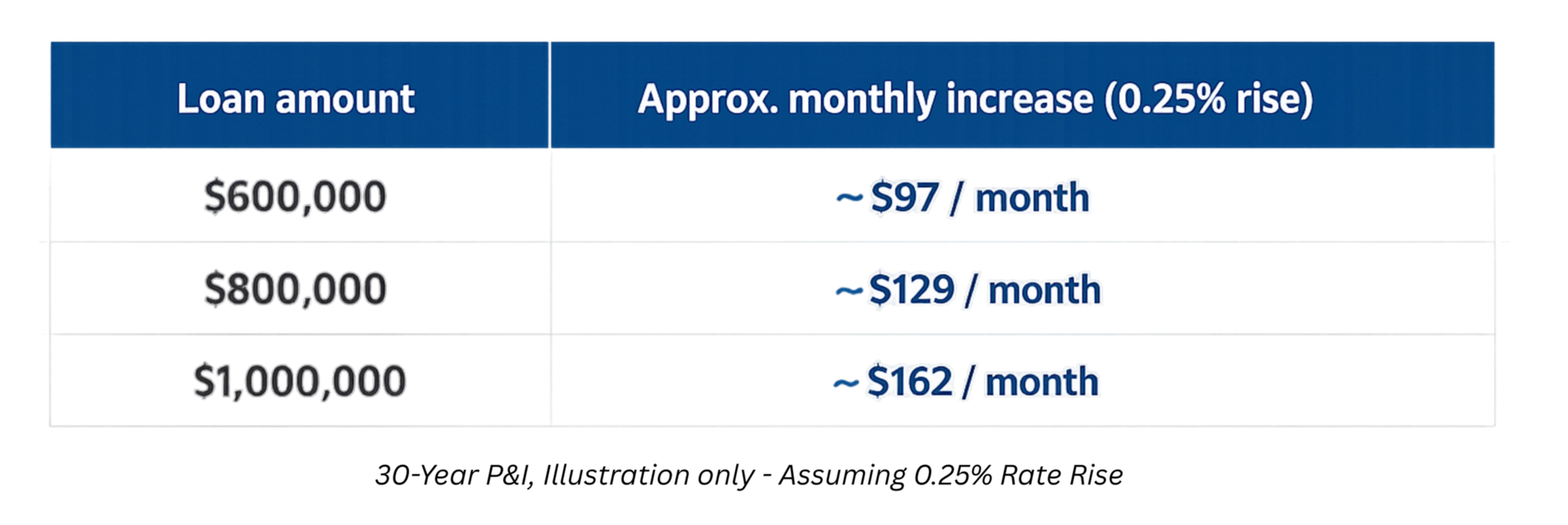
2) Borrowing power drops (this is the real damage)
APRA’s serviceability buffer is +3% and still applies. (apra.gov.au) - So you’re not assessed at your actual rate - you’re assessed higher.
Example: if your actual rate is ~6.25%, a lender may assess you closer to ~9.25% (varies by lender).
When rates rise, that assessment rate rises too - which means:
Serviceability shrinks
Maximum loan size reduces
Your price range can drop overnight
That’s why rate moves don’t just affect repayments - they can change what you’re allowed to buy.
Pre-approval isn’t protection
A pre-approval isn’t a guarantee because:
It can be reassessed
Servicing can be re-run if rates/policy changes
The real test is credit at purchase time
In a tightening market, you don’t want “pre-approved”.
You want “positioned” — with a plan that still works if the goalposts move.
February 2026 is a double squeeze (rates + DTI)
From 1 Feb 2026, APRA’s DTI limits begin: banks can only write up to 20% of new lending at DTI ≥ 6 (separately for investors and owner-occupiers). (apra.gov.au)
Plain English:
High-DTI borrowers become limited capacity
Lenders get pickier and conditions increase
Borderline approvals slow down or fall over
A small rate move can push you into the “harder to place” bucket
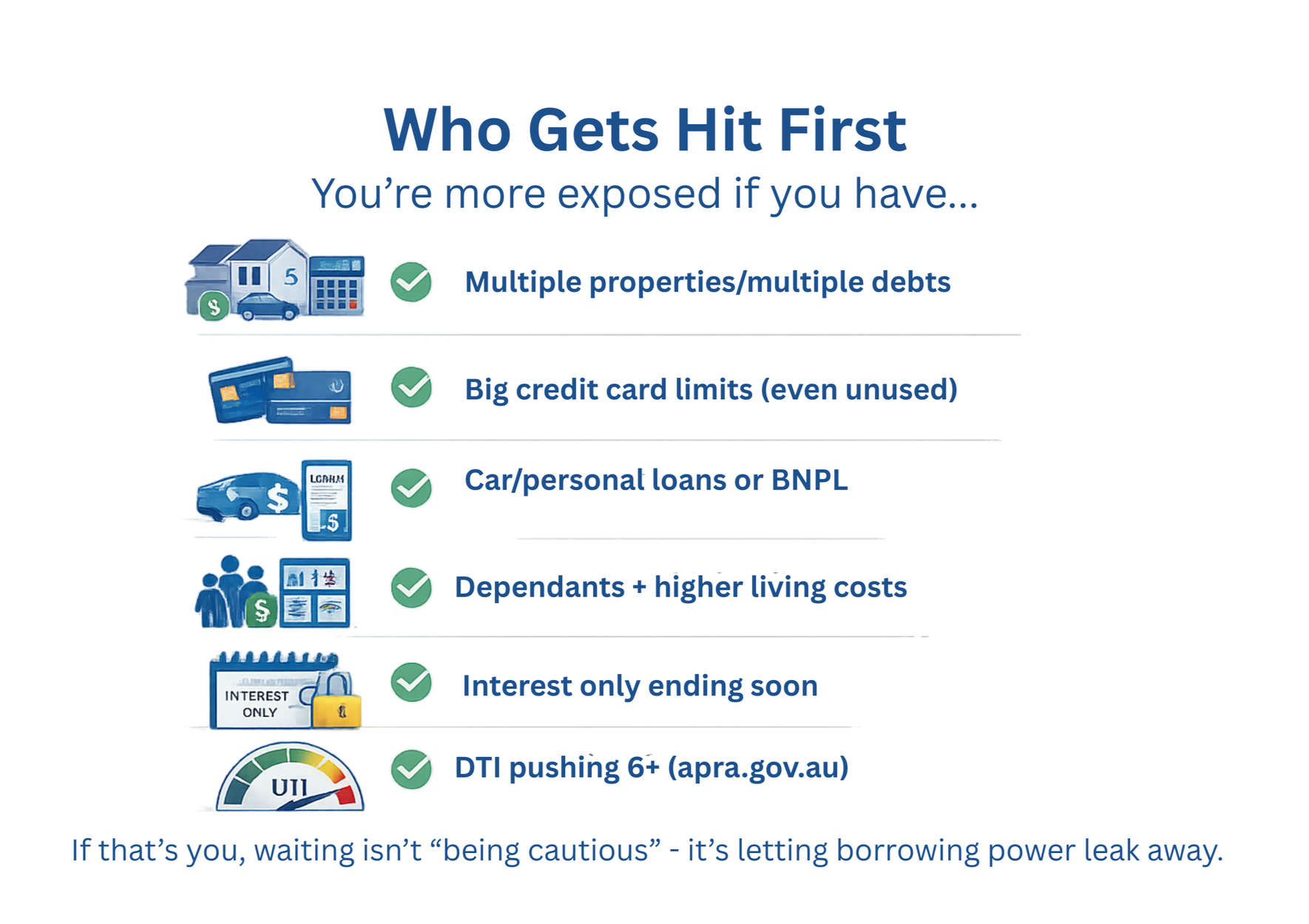
What you’ll actually see when hike risk rises
When hikes are in the air, this is what happens:
Banks move early (fixed rates often shift first)
Borrowing calculators tighten quietly
Credit teams dig harder (more docs, more conditions, more time)
Borderline deals stop working — not because the property is bad, but because finance gets harder to land
And buyers who aren’t ready get forced into bad outcomes:
smaller budget → compromised asset
“cheap” stock → higher risk
rushed purchase → overpaying or accepting bad terms
What smart investors do now
Check borrowing power across multiple lenders
Same borrower, different lender = different result. Policy matters.Remove servicing drag
Cut card limits, clean up consumer debt, structure liabilities properly, simplify the file.Avoid thin deals
If it only works if rates fall, it’s not a strategy — it’s a gamble.Hold buffer
Offsets and liquidity protect you when credit tightens.
Want clarity on your borrowing power before the market reprices it?
If you’re planning to buy soon (or build a portfolio), we can run a quick scenario review with our trusted partners and give you a clear buying range that still works if the RBA moves.
Book a chat with the team.